About the Event
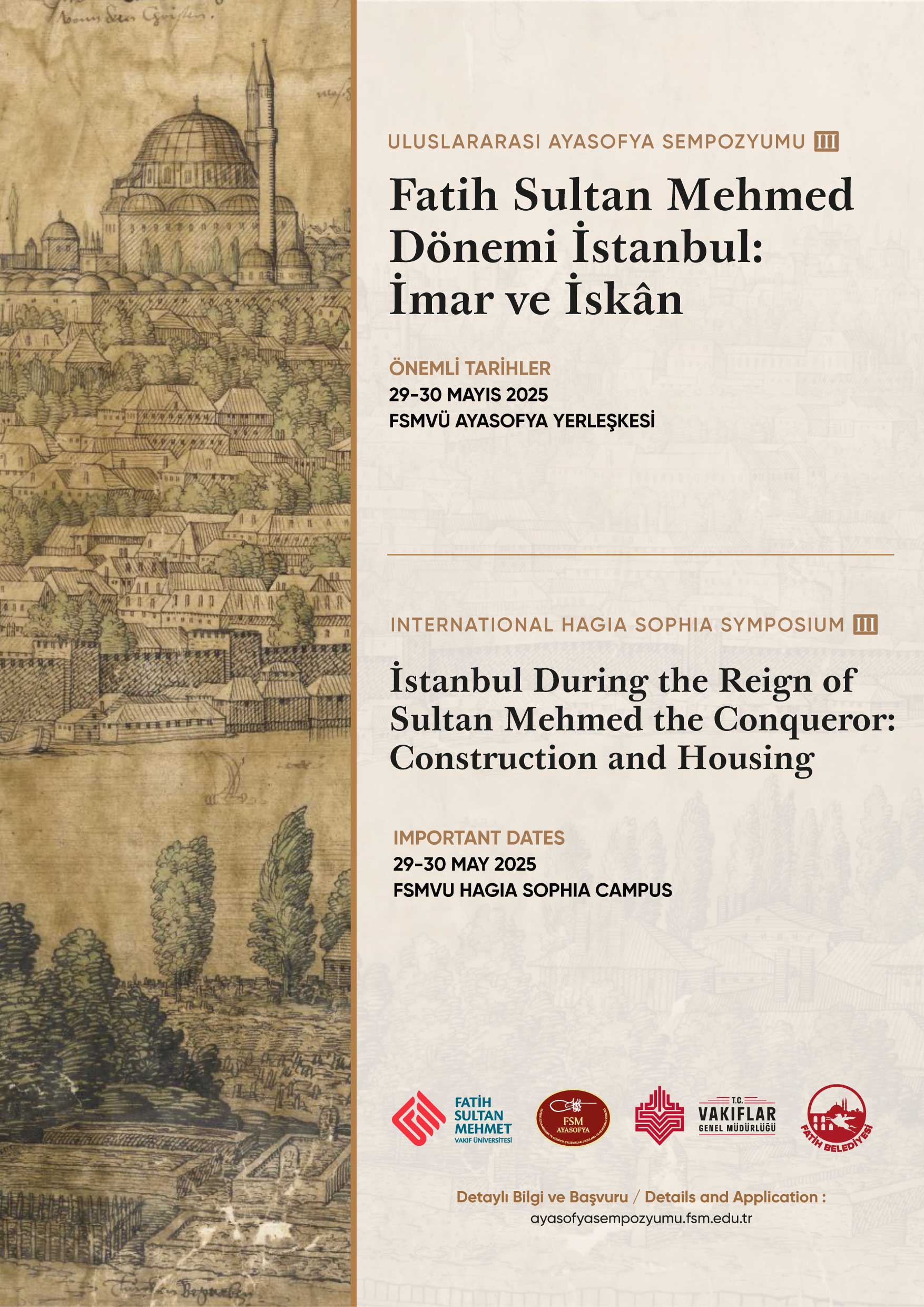
Throughout history, cities have not merely been geographical locations but the most concrete expressions of civilizations; empires and societies have established their presence in these urban spaces. In this context, with its deep-rooted history stretching from Rome to Byzantium and ultimately to the Ottomans, Istanbul stands out as a global city reflecting the social, cultural, and architectural dynamics of each era. However, the most significant transformation in Istanbul’s history undoubtedly occurred with Sultan Mehmed the Conqueror's conquest in 1453. This conquest was not only a political victory but also the beginning of a grand civilizational vision.
By making Istanbul the capital of the Ottoman Empire, Sultan Mehmed the Conqueror granted the city a new identity; he reconstructed this ancient city with both Islamic values and a universal imperial vision. The refunctionalization of structures inherited from Rome and Byzantium, the shaping of the city's demographic composition, and its transformation into a cosmopolitan center were fundamental aspects of this period. The systematic construction and housing policies implemented by the Conqueror, deeply influenced both the physical and social fabric of the Ottoman capital, turning it into the heart of a global civilization.
This symposium aims to discuss the construction and housing policies in Istanbul during the reign of Sultan Mehmed the Conqueror, the transformations that occurred after the conquest and the cultural and architectural heritage inherited from Rome to the Ottomans. Adopting an interdisciplinary approach, the symposium will focus on Istanbul’s reconstruction process during this period from historical, architectural, social, and philosophical perspectives.